How to Style Wide-Leg Trousers With Clothes You Own
Build outfits around wide-leg trousers you already own, with practical ways to compare tops, shoes, hems, and layers.
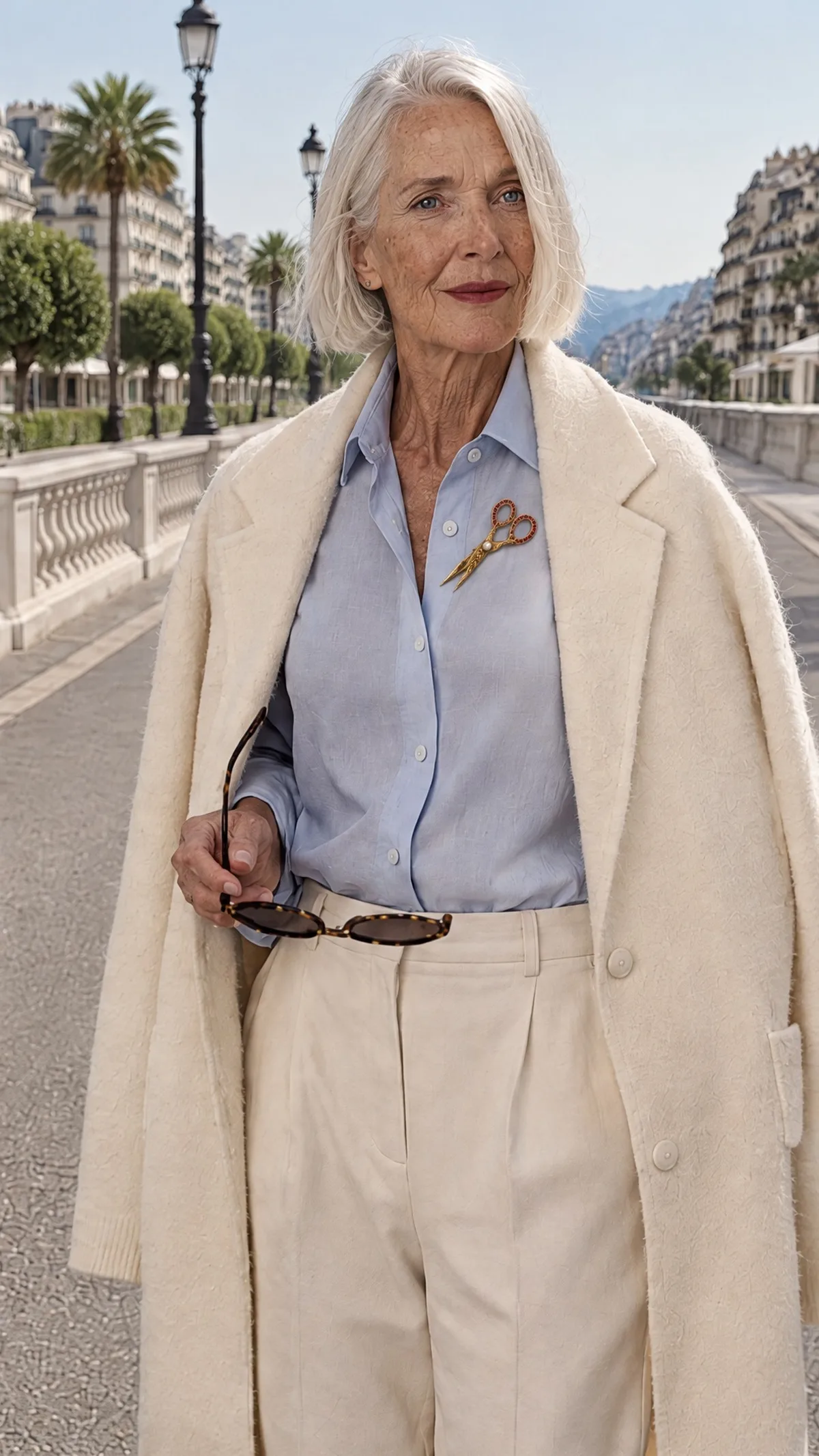
Your wide-leg trousers are already in the closet. The question is what to wear with them on an ordinary day, when the hem has to work with your shoes and the rest of the outfit has to feel like you. Start with a top and shoes you know, then look at the whole combination before making any changes.
A wide leg gives an outfit a generous shape from waist to hem. You can echo that ease with a loose shirt or choose a closer top for a clearer contrast. Neither choice needs to correct your body. The useful test is whether you like the outline and can do what you have planned in the clothes you've chosen.
Start with the shoes and hem
Put on the trousers with shoes you already wear and would choose for the occasion. Standing in front of a mirror, look at where each hem falls over the shoe. Then walk a little, turn, and try any movement relevant to your day, such as using stairs or sitting down and standing up. Notice whether the hem catches underfoot or interferes with your steps.
The view in a mirror is a styling check, not a guarantee of safe movement everywhere. A shoe that changes the position of the hem can change how the outfit looks and behaves, so check the actual combination you intend to wear. Flat shoes are an option; heels are not a requirement.
If the hem interferes as you walk, switch to another existing trouser-and-shoe combination. You can also ask an alterations professional to assess the trousers, including feasibility and cost, before deciding what to do. There is no need to cut or pin a hem yourself, and an alteration is not a guaranteed solution.
Choose the shape you want on top
Try a familiar closer-fitting top first, then an existing loose one. With the closer top, more of the trouser shape may be visible from the waist down. The loose top makes a more continuous, relaxed outline. Look from the front and side, move your arms, and pick the version that suits the occasion and your preference. The trousers do not require a fitted top to earn their place.
Length changes the picture too. An untucked shirt may cover the waistband; a full tuck reveals it. If you want to compare, try a small front tuck and then let it out again. Check how the fabric sits after you sit and stand, and whether you like the look without constant rearranging. Leaving the shirt loose is a complete choice.
Three starting points
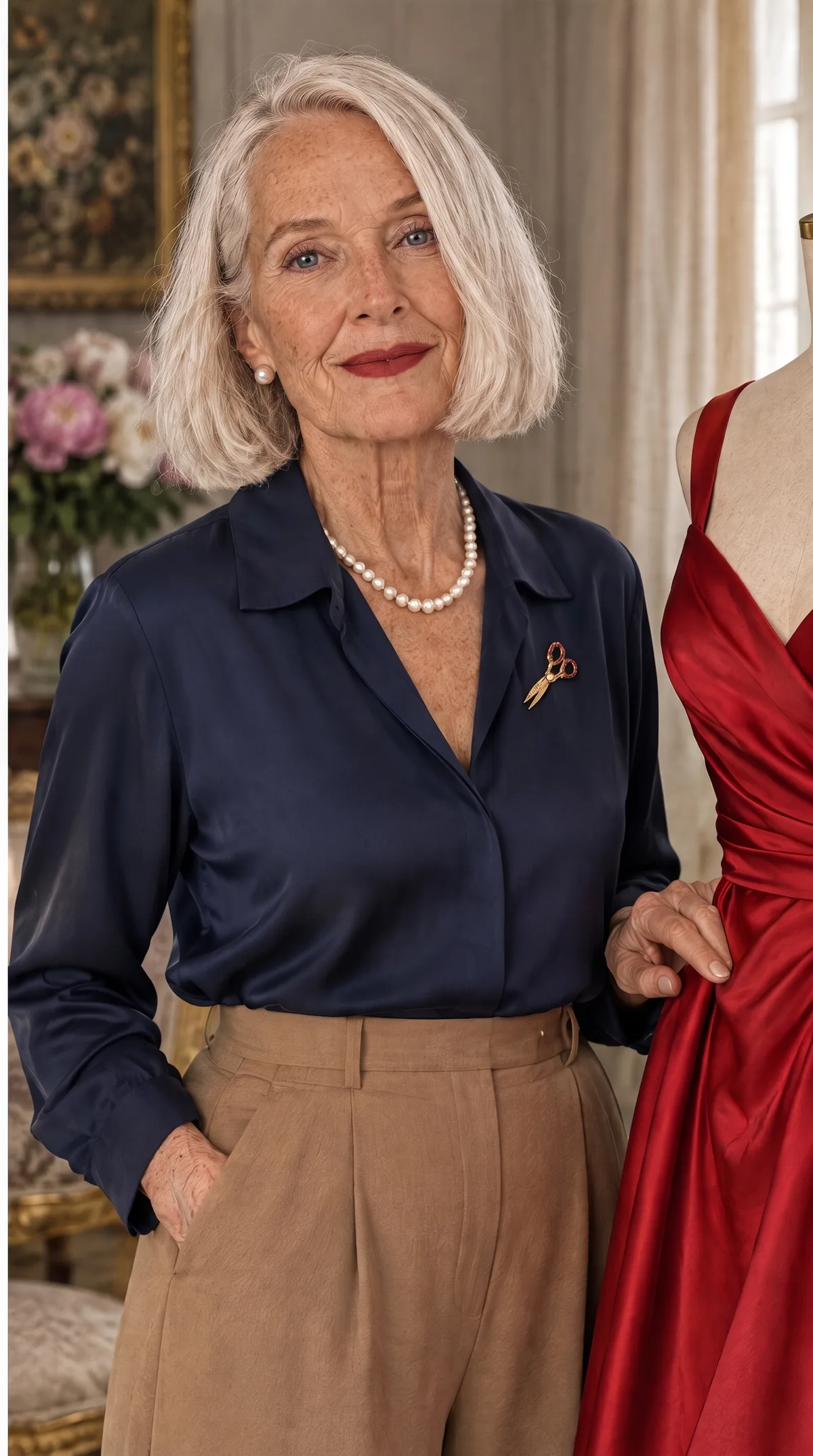
These are hypothetical combinations, using pieces you may already have. Choose the one closest to your plans and substitute from your own closet.
| Situation | Starting decision | What to check |
|---|---|---|
| A simple daytime outfit | Familiar simple top and tried flat shoes | Hem movement on your planned route |
| A shirt without a suit | Button-front shirt, worn as you prefer | Tucked or untucked shape and ease of movement |
| A knit and an outer layer | Familiar knit with an owned jacket or cardigan | The full outline with the layer open or closed |
A simple daytime outfit
Suppose you are dressing for a daytime outing with some walking. Start with your wide-leg trousers, a familiar plain T-shirt, flat shoes you have already tried, and a bag that holds what you need. The simple top leaves the trousers as the most noticeable shape; the bag makes the outfit useful for the outing rather than just presentable in the mirror.
Walk in the shoes and watch the hem. If it gets underfoot, change to another existing trouser-and-shoe combination or seek an assessment before wearing this pair. If the hem stays clear during your check but the top feels too close for the look you want, try a loose top you own. That changes the outline without requiring a new pair of shoes or a new set of rules.
A shirt without a suit
For an occasion when you want a more composed look, try the same trousers with an existing button-front shirt, preferred shoes you have worn before, and a bag suited to what you need to carry. The collar and buttons give the outfit a different emphasis from the T-shirt. You can leave the shirt untucked for a longer line over the trousers, or compare a tuck if you want the waistband visible.
Imagine that the untucked shirt is the look you prefer, but it shifts when you reach for your bag. Try it with the bag on your other shoulder or carry the bag by its handles, if it has them. Another owned shirt may sit differently if you would rather keep your usual bag arrangement. Both alternatives are reversible; the goal is an outfit you can use as intended, not a demonstration of perfect waist definition. Check the hem again with these particular shoes.
Add a knit and a layer
On a day when you want another layer, combine your trousers with a familiar knit top, an owned jacket or cardigan, suitable shoes you have tried, and a bag for your plans. Put the layer on over the knit and look at the outfit open and closed, if it fastens. A shorter jacket reveals more of the trousers; a longer cardigan covers more of the top and hip area. Either shape can be the one you prefer.
Reach forward, sit, and put the bag on or pick it up. If the layer bunches in a way you dislike, try the other outer layer you already own, or wear it open. Check that the shoes and hem still work together. A jacket cannot settle that question from the waist up.
Give one outfit a real assignment
Choose an upcoming use and try the complete outfit, including the bag and the shoes. Check the movements and practical details that matter for that occasion. Then compare one alternate, perhaps a different top or an outer layer worn open, and keep the version you prefer. If the hem interferes, return to the trouser-and-shoe decision before settling on the rest.
For a broader approach to editing, fitting, and wearing the clothes you own, explore the Capsule Wardrobe plan.
Enjoy finding a combination that lets your trousers out of the closet.
With love,
Margot
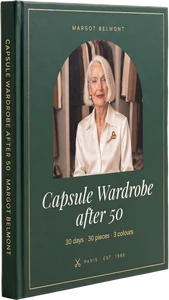
Get dressed in five minutes. 30 days, 30 pieces, 60 outfits on me. PDF workbook · 97 pages · 6 printables.
See inside — $29
I’ve seen every trend twice, darling. Forty years in a Paris atelier, three little guides. More about Margot →
© 2026 margotbelmont.com. This article and its photos are protected by copyright. You are welcome to share a link to it or pin an image that links back here. Please don’t copy, republish or adapt the text or photos, or use them for AI training, without our written permission. Terms