How to Wear a Statement Necklace Without Rebuilding Your Outfit
Try an owned statement necklace with the neckline and activities you have in mind, using practical outfit examples and simple alternatives.

Start with one necklace you already own and an outfit you might actually wear this week. Put them on together and look at where the necklace falls in relation to the neckline. Then move as you expect to during the day. If you like the placement and the piece stays out of your way, you have an option. If either part bothers you, change one element and try again.
A statement necklace can be large, colorful, sculptural, or simply the piece that draws your eye first. It doesn't need a special occasion, and the rest of the outfit doesn't need to be new. It does need a little room to coexist with a collar, a print, or whatever else is happening near your face.
Look at the necklace in context
Lay the piece against the top you have in mind, then put both on. Notice whether the necklace rests on the fabric, sits within the open neckline, or crosses its edge. None of those positions is automatically wrong. The question is whether you like the shape they make together. A pendant caught halfway across a neckline might look intentional to you, or it might be the detail your eye keeps trying to rearrange.
Check how the piece behaves when you sit, reach, and walk. Does it shift into the collar, catch on the fabric, or get in the way of a bag strap? Those observations matter because a combination that looks settled in a mirror may need attention once you move. If the necklace feels too heavy for the time you plan to wear it, leave it for another occasion or choose a different piece you already own. There is no prize for enduring it.
| Starting point | Decision to make |
|---|---|
| With a plain neckline | Compare where the necklace falls with the edge of the top. |
| With a button-front shirt | Choose a comfortable opening and see how the necklace sits with the collar. |
| With a detailed outfit | Decide how much detail you want together, then compare without the necklace. |
A plain top for an ordinary day
Imagine a lunch and a few errands. Start with an owned plain crew-neck top, trousers, flat shoes suitable for walking, and a bag you can carry easily. Add a necklace you enjoy looking at. The plain top gives you a clear view of its shape, while the trousers and flats suit the imagined plans. The bag can be one you already use; it doesn't have to match the necklace.
Suppose the bottom of the necklace lands directly on the crew-neck edge and keeps slipping under it. Try another owned top with a different neckline while keeping the trousers and accessories. If the necklace lies where you prefer and stays there as you reach for the bag, you've changed only the part that was causing the trouble. If it still shifts in a way you dislike, choose another necklace or wear the outfit without one.
The top can stay untucked if that's how you like it. If flats aren't your choice, use another pair of shoes suited to your plans; heels are not required to make the necklace look deliberate. The test is whether this particular combination works for your day, not whether it resembles a formula.
The same necklace with a button-front shirt
Now imagine a casual meeting where you want a little more coverage. Wear the same necklace with an owned button-front shirt, trousers or a skirt, shoes appropriate to the setting, and your usual bag. Here the decision is different: the collar and opening can frame the necklace, cover part of it, or compete with its shape.
Choose the button position that gives you the coverage you want and feels comfortable when seated. Try the necklace over the shirt, then inside the opening if its position allows. Look at both without assuming that either placement is correct. If the collar repeatedly folds over a section you want visible, you might prefer the necklace over the fabric, or another shirt whose collar sits differently. Keep the opening comfortable rather than adjusting it solely to display the jewelry.
For a less formal version, leave the shirt untucked and choose suitable flat shoes. If a bag strap catches the necklace as you put the bag on, try carrying a different owned bag or leaving the necklace off. A tidy arrangement that demands constant correction may be more work than this meeting deserves.
Let a patterned or detailed outfit have a say
A necklace can work with a print or a detailed dress; the combination is a matter of preference, not a ban. For an imagined dinner, try an owned patterned dress with the necklace, suitable shoes, and a bag. Look at the outfit as a whole, then take away any optional accessory you don't particularly want and compare. You may enjoy the necklace against the print, or prefer the dress on its own.
Unlike the plain-top example, the dress already has a visual detail to consider. Unlike the shirt, it may have no adjustable opening. If the necklace sits awkwardly over a decorative neckline or catches as you move, try another owned piece or omit it. A patterned top and trousers can make the same experiment if a dress isn't what you want to wear. Matching the bag or shoes to the necklace is optional in either case.
Choose one outfit to try
Pick an actual upcoming activity and assemble the complete outfit, including shoes and the bag you expect to use. Check the necklace with the neckline, then sit, reach, and walk as appropriate. Compare it with one owned alternative: another necklace, another top, or no necklace at all. Make a note of which version you prefer and anything that shifted or caught, so you can choose without starting over next time.
For a broader approach to editing and wearing the clothes you own, the Capsule Wardrobe plan takes you through an Edit, Tailor, Buy, and Wear process.
Enjoy wearing the necklace in a way that feels like yours.
With love,
Margot
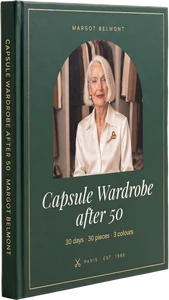
Get dressed in five minutes. 30 days, 30 pieces, 60 outfits on me. PDF workbook · 97 pages · 6 printables.
See inside — $29
I’ve seen every trend twice, darling. Forty years in a Paris atelier, three little guides. More about Margot →
© 2026 margotbelmont.com. This article and its photos are protected by copyright. You are welcome to share a link to it or pin an image that links back here. Please don’t copy, republish or adapt the text or photos, or use them for AI training, without our written permission. Terms