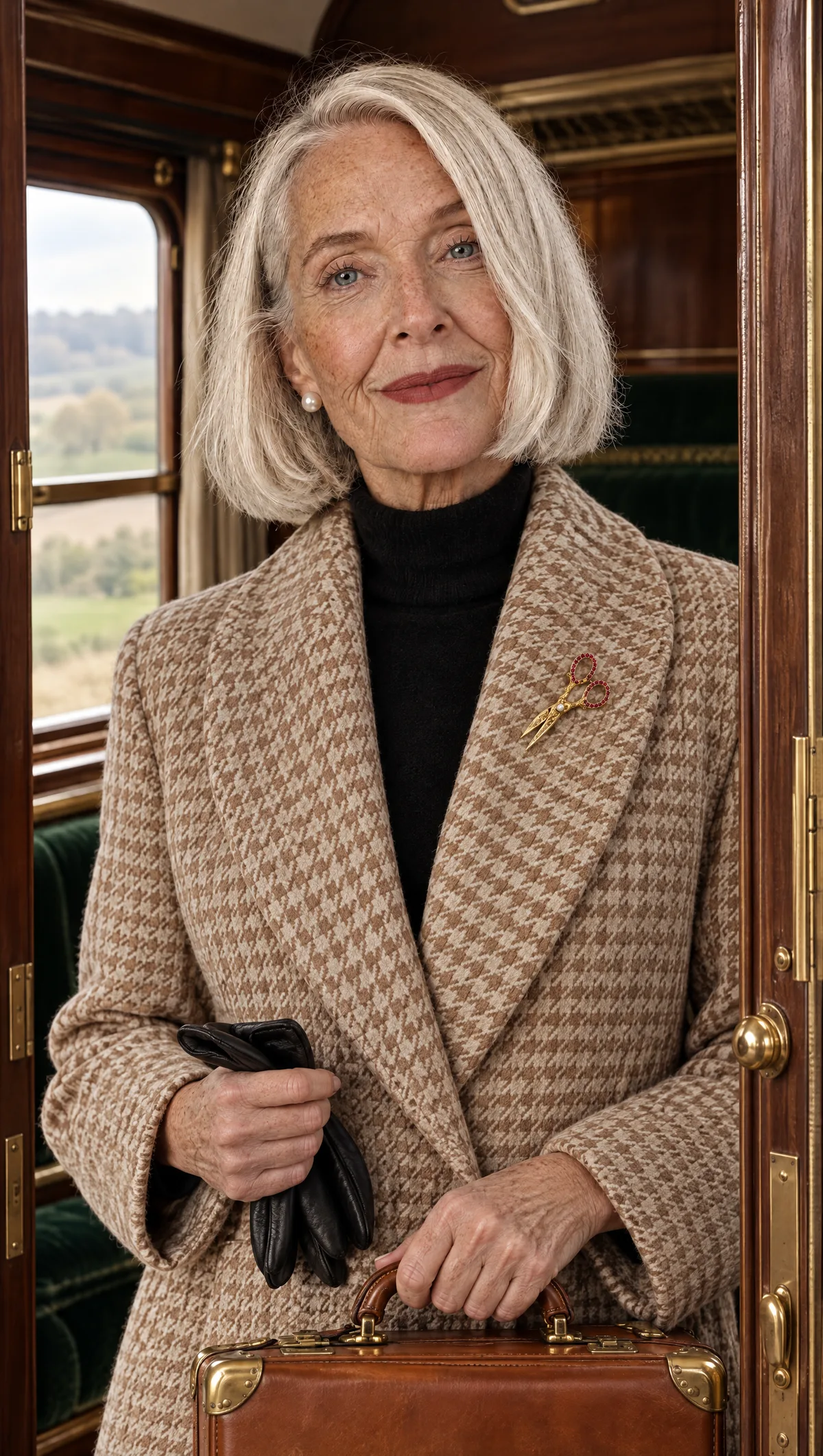
How to Wear a Belt: Decide What It Adds to Your Outfit
Use a belt you already own for support or as a visual detail, and learn when an outfit works better without one.

Before choosing a belt, get dressed in the clothes you intend to wear. Look at the outfit without one, then ask what you want the belt to do. Perhaps your trousers need a little support, or you like the way a buckle breaks up a plain dress. Perhaps the outfit already looks and feels right.
A belt is a small addition, but its position can change where the eye pauses. It can also be entirely hidden under a top while doing a practical job. Start with the belts you own and compare them in the actual outfit; there is no need to add one simply because loops are present.
Give the belt a job
For support, choose an owned belt that passes easily through the garment's existing loops and fastens without force. Walk and sit in the trousers. If the belt helps keep them where you want them and still feels comfortable, it has earned its place. If the trousers fit poorly even with it, a belt is not a reliable substitute for addressing the fit. Choose another pair for now.
A visual belt has a different job. It might introduce a visible line across a dress, pick up a detail you enjoy, or give a tucked-in shirt a more defined finish. Those are choices, not obligations. If a loose top covers the belt, decide whether you still want it for support; its appearance may matter less in that outfit.
| Situation | Decision to make | When to skip it |
|---|---|---|
| Through existing trouser loops | Does an owned belt fit the loops and provide the support or visible detail you want? | Skip it if the trousers stay in place and you prefer the unbelted look, or if the belt does not fit. |
| Over a complete dress | Do you like the belt's position and the way it feels when seated? | Leave it off if you prefer the dress's uninterrupted shape or the fabric is delicate. |
| With a long top or cardigan | Would a visible belt add something you want, or would a hidden one help the trousers? | Leave it off when the layers work as they are or the knit is delicate. |
Choose placement and width in the outfit
On trousers, the existing loops determine where a threaded belt sits. Check that the belt fits through them without bunching the fabric, and that the buckle sits comfortably when you bend or sit. An untucked shirt may hide it; a tucked or partly tucked shirt will show more of it. Try the top both ways if you want to compare the effect.
Over a dress or sturdy long top, placement is a choice. Place an existing belt where you like the line it makes, fasten it comfortably, and see what happens to the fabric as you move. If it shifts somewhere you dislike, catches on a seam, or changes the garment in a way you don't enjoy, try another owned belt or wear the garment without one. Avoid belting fragile fabric.
Width changes how much of the belt you see. A narrower belt can be a quieter mark across an outfit; a wider one may become more noticeable. Neither is a prescription. Compare what you have against the garment, including any loops, and choose the combination you prefer while standing and sitting.
Worked situation: trousers that need a little support
Suppose you are dressing for a day that includes a seated lunch and some walking. You have trousers with loops, a soft shirt, loafers, a shoulder bag and a belt that passes easily through those loops. The trousers are otherwise a good fit, but you would like a little help keeping the waistband in place.
Thread the belt through the loops and tuck in the shirt so you can see the buckle. Fasten it without pulling the fabric into tight gathers, then sit down and walk a little. In this outfit the belt has a practical reason to be there, and the visible buckle adds a detail to the shirt and trousers. The loafers and shoulder bag complete a combination you can assess for the day rather than judging the waistband in isolation.
If the buckle feels awkward when seated, leave the shirt untucked and see whether that changes your preference for the look; it will not change the buckle's fit. If the belt itself is uncomfortable, try another owned belt that fits the loops. If none works, choose trousers that stay in place without one. A belt need not be recruited to fix a pair that doesn't fit well.
Worked situation: a dress with room for choice
Now imagine an owned dress in a sturdy fabric, worn with flat shoes and a small bag for an afternoon out. The dress is complete on its own. Try it first without a belt and notice the continuous shape from shoulder to hem. Then add an owned belt and place it where you like the visible line; sit down before deciding whether it stays.
You may prefer the added detail for this outing, especially if the plain dress feels a little too uninterrupted for your taste. Or the line may compete with a seam you like, or feel distracting when you sit. In that case, remove it and let the dress stand alone. The same shoes and bag still make a complete outfit. If you own another suitable belt, you can compare its width or placement without changing the rest of the clothes.
For a delicate dress, skip the belt rather than risk catching the fabric. An open cardigan already in your closet offers a different layer if you want a change, with no need to fasten anything around the dress.
A long layer without a belt
Consider an open cardigan over a T-shirt and trousers, with flats and a crossbody bag. The long layer gives the outfit its own line, while the T-shirt and trousers make a complete base underneath. Leave the cardigan open if you like how it hangs, particularly if the knit is delicate.
If the trousers have compatible loops and would benefit from support, an owned belt can go through them under the cardigan. It need not be the visible focus. If the trousers stay where you want them, try the outfit without it and see whether the simpler waistband feels better. You can also close a suitable cardigan in its usual way if you prefer that look, without fastening a belt over it.
Make the final comparison
For an upcoming outing, choose one complete outfit and try the version you expect to wear. Sit, walk and reach as your plans require; check whether the buckle, layers and bag sit where you want them. Then compare one alternative: the same outfit without the belt, another belt you own, or a different pair of trousers. Keep the version that does the job you actually need.
For a broader approach to editing, fitting and wearing your clothes, explore the Capsule Wardrobe plan.
Enjoy finding the version of the outfit that feels like yours.
With love,
Margot
Get dressed in five minutes. 30 days, 30 pieces, 60 outfits on me. PDF workbook · 97 pages · 6 printables.
See inside — $29
I’ve seen every trend twice, darling. Forty years in a Paris atelier, three little guides. More about Margot →
© 2026 margotbelmont.com. This article and its photos are protected by copyright. You are welcome to share a link to it or pin an image that links back here. Please don’t copy, republish or adapt the text or photos, or use them for AI training, without our written permission. Terms