How to Wear Ankle Boots: Work With the Hem You Have
Build outfits with ankle boots you already own by comparing trouser, dress, and skirt hems.

Start with ankle boots you already own and have tried, then choose a pair of trousers or jeans you might wear with them. Look at where the hem meets the boot opening while you stand and walk. If you like what you see and the clothes move as you want them to, add a familiar top and a bag. You have the beginnings of an outfit without buying or altering a thing.
The meeting point can be visible or covered. There is no required gap, and no need to measure one. A hem that looks lovely while standing still may behave differently when you walk or sit, so let the actual clothes have a say before you decide.
Start at the boot opening
Notice whether the opening sits close to your ankle or stands away from it, and whether the trouser hem falls above, over, or against that edge. A wider hem may go over the boot; a narrower one may sit above it or, if both garments allow it without bulk, go inside. None of these arrangements is the correct one for every pair.
Try your preferred arrangement and take a few steps. Does the hem catch, bunch, or shift in a way you dislike? Sit down too, especially if you plan to spend part of the day seated. A little change in position may be perfectly acceptable to you; continual rearranging may not be worth the trouble.
This is visual styling advice, not footwear or fit treatment. If the boots or hem interfere with movement, or the shoes cause pain, choose another owned garment or personally suitable pair of shoes. The outfit does not get a vote over that decision.
| Outfit starting point | Decision to make |
|---|---|
| With trousers or jeans | Compare the hem with the boot opening as you stand and move; try another owned pair if the combination catches or bunches. |
| With a complete dress | Look at the dress hem and boot edge together, then decide whether you like the space or coverage between them. |
| With a skirt and an explicit top | Choose a top for the skirt, then check how the skirt hem and boot edge look together in motion. |
Trousers: over, inside, or another pair?
For a hypothetical day of errands, suppose your already-tried black ankle boots have a fairly close opening. You own straight-leg jeans, a cream sweater, a crossbody bag and a jacket. With the jeans over the boots, the hem rests against the opening when you stand, then catches on it as you walk. The sweater and bag are useful parts of the outfit, but they cannot negotiate with a stubborn hem.
First see whether the jeans sit above the boot naturally in a way you like. If they do, leave them there; an exposed strip is a choice, not a requirement. If they do not, and the hem goes inside the opening without being forced or creating bunching you dislike, you might prefer that arrangement. Check it while sitting and walking as well as standing.
If neither position works, try another owned pair. Suppose your wider trousers fall over the same boots and stay where you want them during those movements. Wear them with the cream sweater, crossbody bag and jacket instead. The decision came from the hem and opening you actually have, not a rule about what straight jeans are supposed to do. If the wider pair also catches, change footwear or choose another garment.
A long hem that covers the boot may be exactly the look you want, provided it does not interfere with your movement. Equally, a shorter hem can leave the boot edge visible. You do not have to tuck fabric into a narrow opening or cut a hem to make either idea work.
A dress changes the comparison
Now imagine using those same black boots for an outing with an owned, complete navy dress, a shoulder bag and a cardigan if you want a layer. The dress hem ends above the boot edge. Put the whole outfit on and walk a little: the question is whether you like that space between the two edges as the dress moves. You might add tights you already own if you prefer the look or coverage; bare legs are not part of the assignment.
If the space feels too prominent to your eye, try an owned longer dress with the same boots and bag. Its hem may sit closer to, or fall over, the boot edge. Check what happens when you walk and sit, then keep the version you prefer. The navy dress is not a failed outfit if you choose the longer one; it is simply a different combination. Consider your actual plans and conditions when choosing the layer and footwear, since a pleasing mirror check cannot decide those for you.
Give a skirt its own top
A skirt asks for one more decision than a complete dress. Imagine the same boots with an owned calf-length skirt, a soft knit top, a shoulder bag and, if wanted, a jacket. The knit gives the skirt a simple companion, leaving you free to notice how its moving hem relates to the boot edge. A tucked or untucked top can change the outfit's appearance; choose whichever arrangement you enjoy and can wear as you wish.
If the skirt overlaps the boot and you like that effect, keep it. If the hem catches or the combination is not to your taste, try another skirt you own or return to the dress. There is no need to seek a shorter hem or expose your legs. A different top can also make the same skirt feel more suitable for your plans without changing the boot-and-hem pairing.
Make one decision for the week ahead
Choose an upcoming use, then assemble one complete outfit from your own closet, including a bag and any layer you expect to need. Try it on with your already-tried boots. Stand, walk and sit; check that the items are available for the day and that the combination suits what you plan to do. If you are deciding between two hems, compare both with the same boots and top or dress. Note the combination you prefer so you can find it again.
For broader help organizing and wearing what you own, the Capsule Wardrobe plan offers a wardrobe-planning process.
I hope your boots find a companion you enjoy wearing.
With love,
Margot
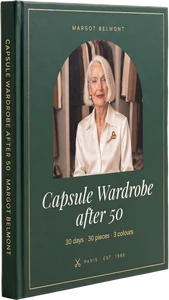
Get dressed in five minutes. 30 days, 30 pieces, 60 outfits on me. PDF workbook · 97 pages · 6 printables.
See inside — $29
I’ve seen every trend twice, darling. Forty years in a Paris atelier, three little guides. More about Margot →
© 2026 margotbelmont.com. This article and its photos are protected by copyright. You are welcome to share a link to it or pin an image that links back here. Please don’t copy, republish or adapt the text or photos, or use them for AI training, without our written permission. Terms